Bound in heart to the Lord, let us journey through the Fast toward Him, our risen Lord
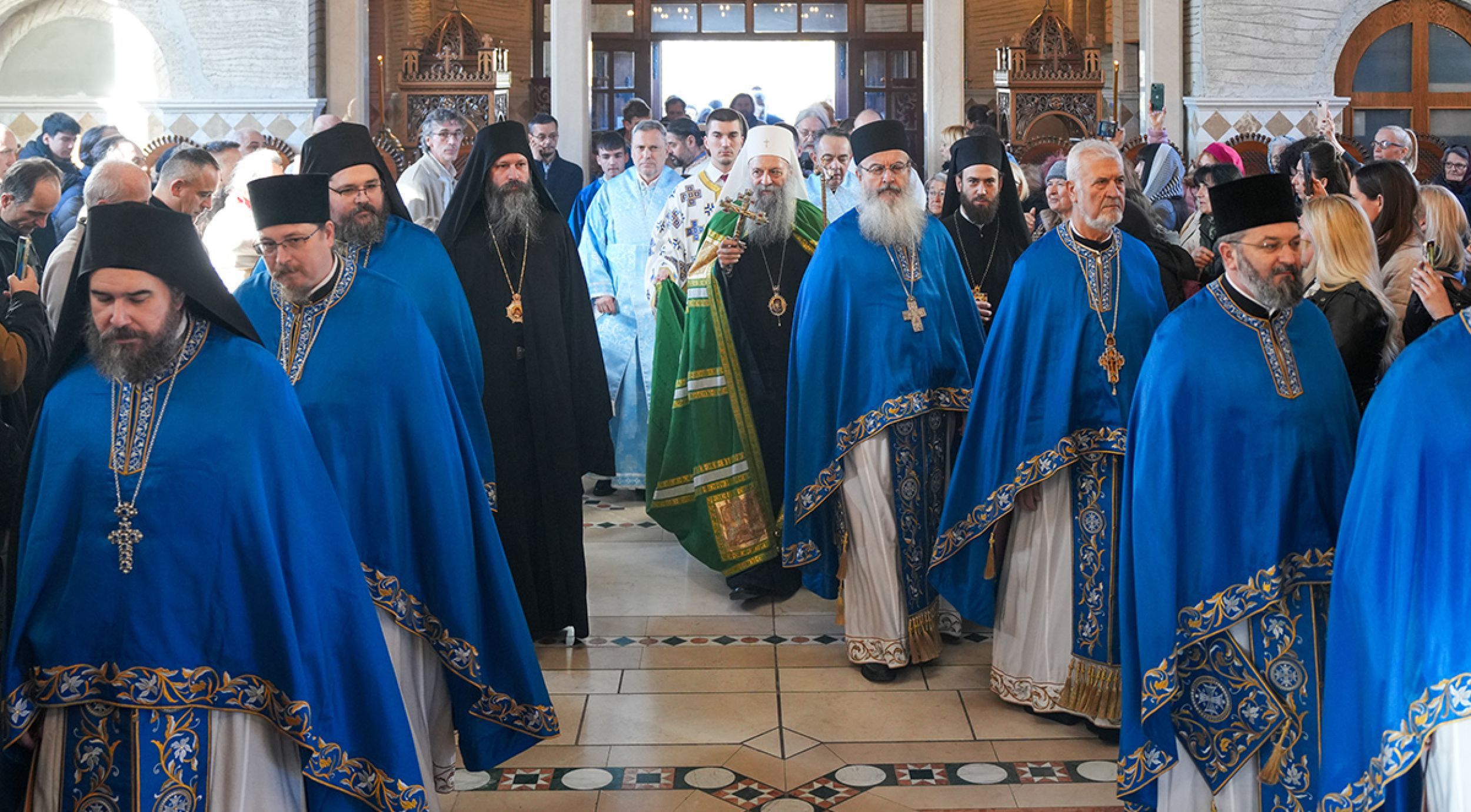
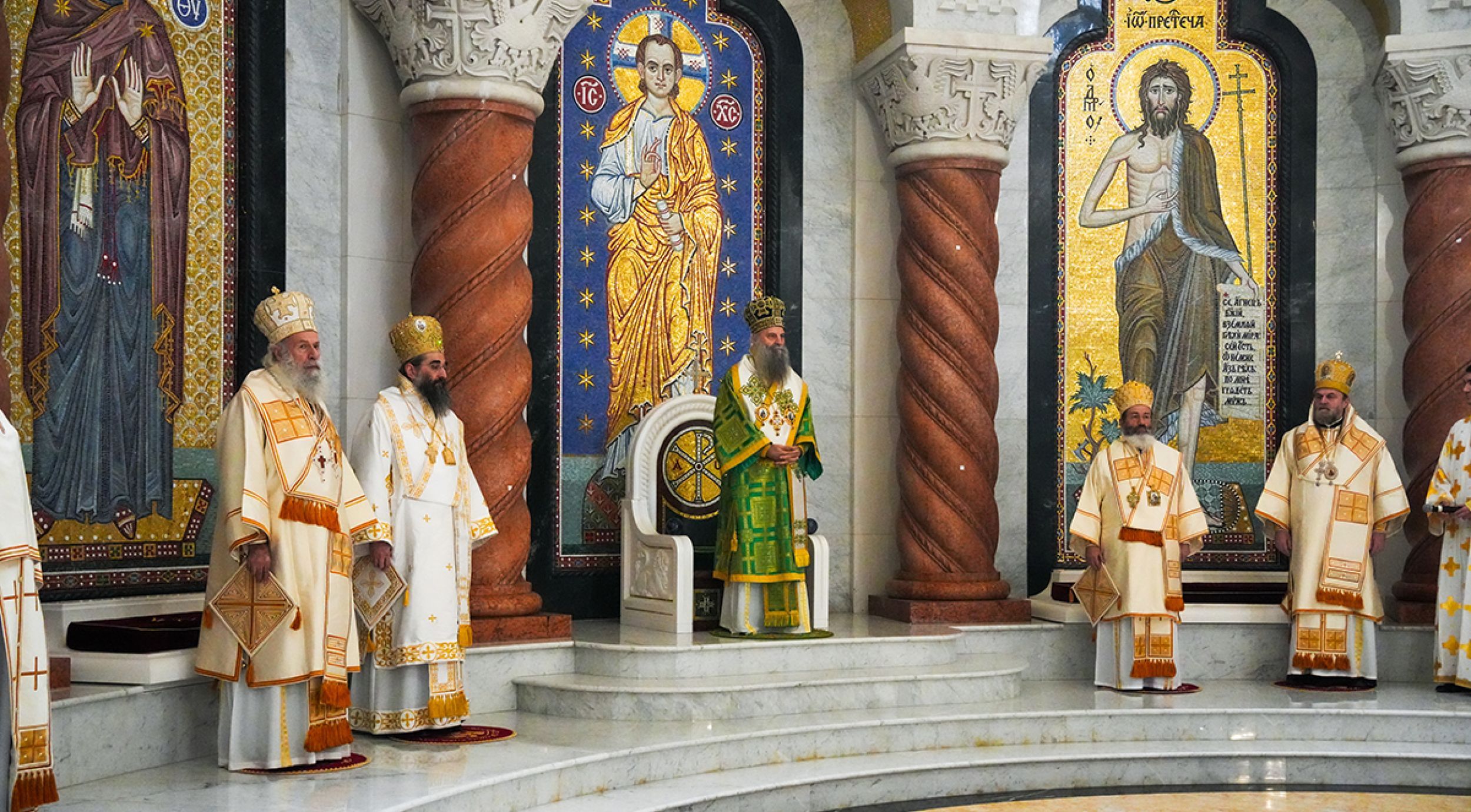
Sermon of His Holiness Serbian Patriarch kyr Porfirije, delivered on 22 February 2026, on Cheesefare Sunday, at the Holy Liturgy in the Church of Saint Sava on Vračar
In the name of the Father and of the Son and of the Holy Spirit! Brothers and sisters, today is Cheesefare Sunday. This means that tomorrow, God willing, Great Lent begins. The Great Fast begins, which is preparation for the greatest and most important Feast, the essential Feast, the Feast that reveals the meaning of our faith — the Feast of the Resurrection of the Lord. This fast, this spiritual journey and spiritual ascetic feat, lasts forty days, and then there is added that week which we call Holy Week.
Today we heard a passage from the Gospel according to Matthew, from the sixth chapter of that Gospel, a passage that is part of the Sermon on the Mount, and which is directly preceded by Christ’s instruction on how we should pray. It simply shows us that the best prayer, the prayer that contains all that our word addressed to God should include, is the prayer we call the Our Father. It is a prayer that each of us says individually, yet in it, even though we address God personally, we say that He is our Father. On the one hand, we show that we desire communion with God, but at the same time we say that God is not only my Father, but our Father. By this we also show that we are a community among ourselves.
Thus, in this passage from the Gospel, which should be an instruction for what is important for us to know during the fast, we are given the prayer Our Father. In that prayer we ask that the Kingdom of God and His will, the will of God, be here on earth as it is in heaven. We ask that the Lord give us all that is necessary and essential for our life — not only bodily and outward life, but also the inner life. And then we ask God to be merciful to us, to forgive us everything we have done by word, deed, or thought that is contrary to His will. We ask Him to forgive us, because we know that only and exclusively if God is merciful and forgives us can we be near Him, can we be in His embrace. Of course, we also remind ourselves that we must not harbor hatred, bitterness, anger, or vengefulness toward anyone, regardless of whether in our dealings with our neighbor we are in the right or not.
We must not have bitterness in our hearts. We do not wish to have bitterness; we ask God to cleanse us, because if we rely on ourselves, on our own strength and power, we know that we will not always be able even to say a proper thank you; we will not even be grateful for the good that the Lord does for us, or that any of our neighbors do, always and in the right way. And therefore, we ask the Lord to help us to forgive others, to be merciful, because we know that He forgives us.
Today’s Gospel tells us that Great Lent is fasting, it is the ascetic labor of fasting, but it also implies prayer, it implies repentance, and repentance includes forgiveness. And the Lord repeats once again in this passage we have heard that if we are merciful toward our neighbors, toward other people, if we forgive them, then the Lord will forgive us. If we forgive the sins of others, the Lord will forgive us and has already forgiven us. However, if we are not ready to forgive others, we will not be able to recognize God’s mercy, to accept and receive His forgiveness, because there will be bitterness, ice, hatred, frost, and coldness in our souls. And this is what we must bear in mind, brothers and sisters, throughout this entire fast.
There is yet another dimension that is important, to which the Lord reminds us — one we often encounter elsewhere in the Gospel — and that is to be conscious, when we have done everything, that we are unworthy servants of God, and that what we have done is also a gift of God’s love.
Therefore, it is understood that we should fast. However, fasting is not an end in itself, and during the fast it is not most important to concern ourselves with the outward rules of fasting, although fasting has been envisaged by the man-loving mind of the Church to be practiced as prescribed by the Church’s rules, by the experience of the Church and the experience of the saints. Indeed, there are instructions and rules that we should know and, as much as we can, use and fulfill as auxiliary means and guidelines, knowing that the rules are not the goal. The rules are auxiliary means; the rules are only tools, as is the entire fast, which leads us to one single goal: communion with God and communion of love with other people. This means using our capacities, gifts, and abilities in accordance with the holy will of God — that is, in accordance with our healthy, normal, and proper way of life, which reflects the nature we have received from God.
Therefore, we should not fast, as today’s Gospel reminds us, like hypocrites, in order to be seen by others. We should not fast in order to receive special honors and vainglory, but rather secretly — in the depth of our souls, in repentance and in seeking forgiveness from God, in forgiving others, not like the Pharisees and scribes, but like the publican, like one who is aware of his weaknesses — we should strive, while respecting the rules of the fast, to the extent that we can or to the extent that we have the blessing of our priest, to fast and to fulfill all that the fast requires of us.
Fasting should not be merely bodily discipline, merely a diet, but we should struggle against every evil thought, against every ugly emotion, against everything that is contrary to God’s will and contrary to our nature.
Thus, outward fasting is certainly important, and keeping the rules of outward fasting is important because it prepares us, trains us, and makes us capable of detecting all that is negative within us — evil and sin — so that we may cut it off and cleanse our field, the field of our soul, so that from it may spring the sown seeds of virtue, goodness, love, mercy, and love for mankind. And of course, all of this should be permeated with repentance.
Therefore, it is important, as this Gospel says at the end, that we take care of what is most important for us, to what our heart will be bound. For where our treasure is — what is important to us, what we proclaim to be important — there will also be the place where our heart, that is, we ourselves, will dwell. And this does not concern only outward goods. If vainglory, love of money, pride of mind, love of power — if these are our inner longings, what expresses us — then our heart will be bound to what binds us, to this world, and not to God.
Our heart should be bound to the Lord, and this means that we will be sober-minded and humble-minded, that we will be able to distinguish good from evil, that we will always, journeying during this fast, journey toward Him, our Risen Lord, Whom we glorify together with His Father and the Holy Spirit, now and ever and unto the ages of ages. Amen.
In the name of the Father and of the Son and of the Holy Spirit! Brothers and sisters, today is Cheesefare Sunday. This means that tomorrow, God willing, Great Lent begins. The Great Fast begins, which is preparation for the greatest and most important Feast, the essential Feast, the Feast that reveals the meaning of our faith — the Feast of the Resurrection of the Lord. This fast, this spiritual journey and spiritual ascetic feat, lasts forty days, and then there is added that week which we call Holy Week.
Today we heard a passage from the Gospel according to Matthew, from the sixth chapter of that Gospel, a passage that is part of the Sermon on the Mount, and which is directly preceded by Christ’s instruction on how we should pray. It simply shows us that the best prayer, the prayer that contains all that our word addressed to God should include, is the prayer we call the Our Father. It is a prayer that each of us says individually, yet in it, even though we address God personally, we say that He is our Father. On the one hand, we show that we desire communion with God, but at the same time we say that God is not only my Father, but our Father. By this we also show that we are a community among ourselves.
Thus, in this passage from the Gospel, which should be an instruction for what is important for us to know during the fast, we are given the prayer Our Father. In that prayer we ask that the Kingdom of God and His will, the will of God, be here on earth as it is in heaven. We ask that the Lord give us all that is necessary and essential for our life — not only bodily and outward life, but also the inner life. And then we ask God to be merciful to us, to forgive us everything we have done by word, deed, or thought that is contrary to His will. We ask Him to forgive us, because we know that only and exclusively if God is merciful and forgives us can we be near Him, can we be in His embrace. Of course, we also remind ourselves that we must not harbor hatred, bitterness, anger, or vengefulness toward anyone, regardless of whether in our dealings with our neighbor we are in the right or not.
We must not have bitterness in our hearts. We do not wish to have bitterness; we ask God to cleanse us, because if we rely on ourselves, on our own strength and power, we know that we will not always be able even to say a proper thank you; we will not even be grateful for the good that the Lord does for us, or that any of our neighbors do, always and in the right way. And therefore, we ask the Lord to help us to forgive others, to be merciful, because we know that He forgives us.
Today’s Gospel tells us that Great Lent is fasting, it is the ascetic labor of fasting, but it also implies prayer, it implies repentance, and repentance includes forgiveness. And the Lord repeats once again in this passage we have heard that if we are merciful toward our neighbors, toward other people, if we forgive them, then the Lord will forgive us. If we forgive the sins of others, the Lord will forgive us and has already forgiven us. However, if we are not ready to forgive others, we will not be able to recognize God’s mercy, to accept and receive His forgiveness, because there will be bitterness, ice, hatred, frost, and coldness in our souls. And this is what we must bear in mind, brothers and sisters, throughout this entire fast.
There is yet another dimension that is important, to which the Lord reminds us — one we often encounter elsewhere in the Gospel — and that is to be conscious, when we have done everything, that we are unworthy servants of God, and that what we have done is also a gift of God’s love.
Therefore, it is understood that we should fast. However, fasting is not an end in itself, and during the fast it is not most important to concern ourselves with the outward rules of fasting, although fasting has been envisaged by the man-loving mind of the Church to be practiced as prescribed by the Church’s rules, by the experience of the Church and the experience of the saints. Indeed, there are instructions and rules that we should know and, as much as we can, use and fulfill as auxiliary means and guidelines, knowing that the rules are not the goal. The rules are auxiliary means; the rules are only tools, as is the entire fast, which leads us to one single goal: communion with God and communion of love with other people. This means using our capacities, gifts, and abilities in accordance with the holy will of God — that is, in accordance with our healthy, normal, and proper way of life, which reflects the nature we have received from God.
Therefore, we should not fast, as today’s Gospel reminds us, like hypocrites, in order to be seen by others. We should not fast in order to receive special honors and vainglory, but rather secretly — in the depth of our souls, in repentance and in seeking forgiveness from God, in forgiving others, not like the Pharisees and scribes, but like the publican, like one who is aware of his weaknesses — we should strive, while respecting the rules of the fast, to the extent that we can or to the extent that we have the blessing of our priest, to fast and to fulfill all that the fast requires of us.
Fasting should not be merely bodily discipline, merely a diet, but we should struggle against every evil thought, against every ugly emotion, against everything that is contrary to God’s will and contrary to our nature.
Thus, outward fasting is certainly important, and keeping the rules of outward fasting is important because it prepares us, trains us, and makes us capable of detecting all that is negative within us — evil and sin — so that we may cut it off and cleanse our field, the field of our soul, so that from it may spring the sown seeds of virtue, goodness, love, mercy, and love for mankind. And of course, all of this should be permeated with repentance.
Therefore, it is important, as this Gospel says at the end, that we take care of what is most important for us, to what our heart will be bound. For where our treasure is — what is important to us, what we proclaim to be important — there will also be the place where our heart, that is, we ourselves, will dwell. And this does not concern only outward goods. If vainglory, love of money, pride of mind, love of power — if these are our inner longings, what expresses us — then our heart will be bound to what binds us, to this world, and not to God.
Our heart should be bound to the Lord, and this means that we will be sober-minded and humble-minded, that we will be able to distinguish good from evil, that we will always, journeying during this fast, journey toward Him, our Risen Lord, Whom we glorify together with His Father and the Holy Spirit, now and ever and unto the ages of ages. Amen.
Најновије вести
15.06.2026 12:23
Diocesan Day solemnly celebrated on All Saints’ Sunday
29.05.2026 19:36